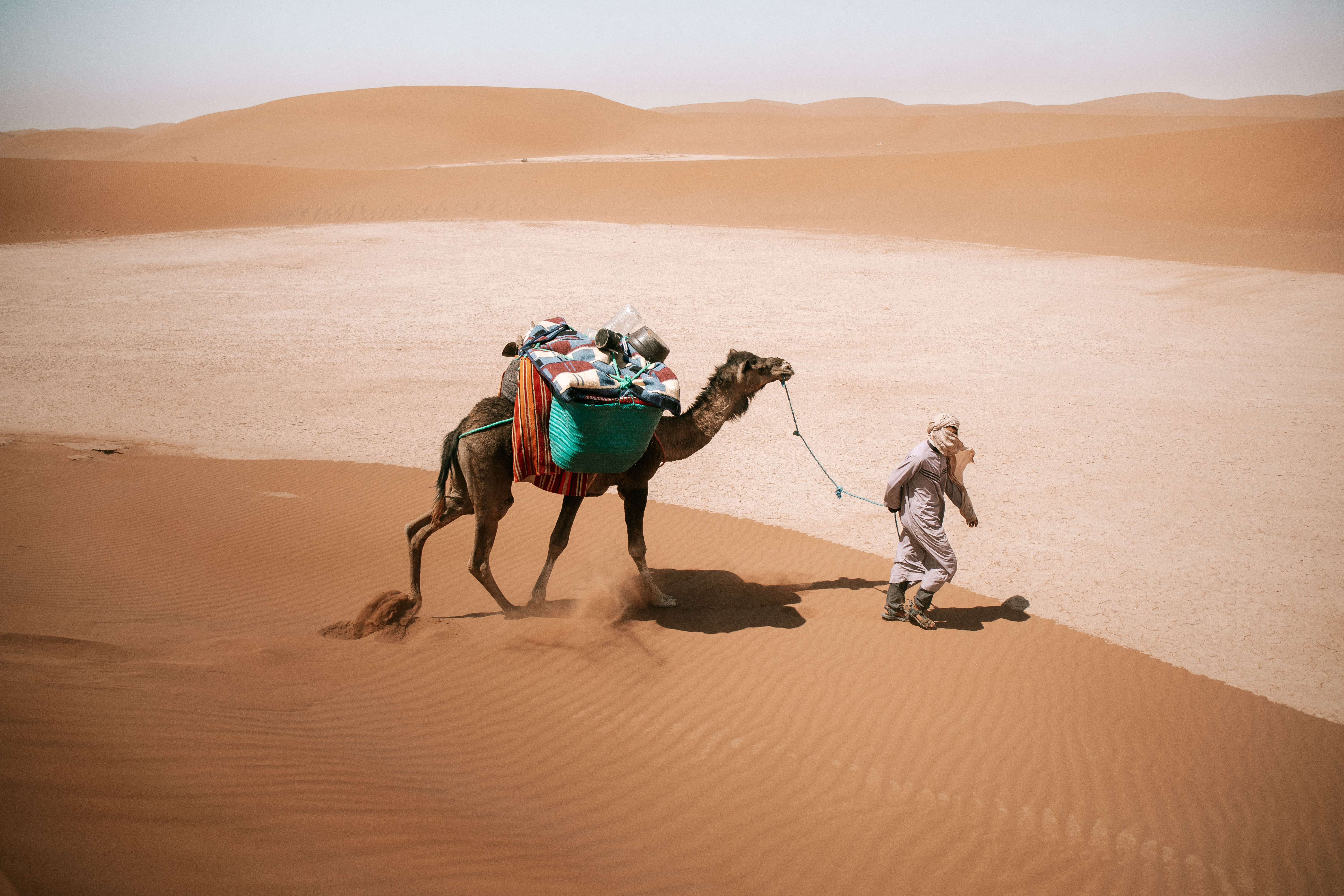
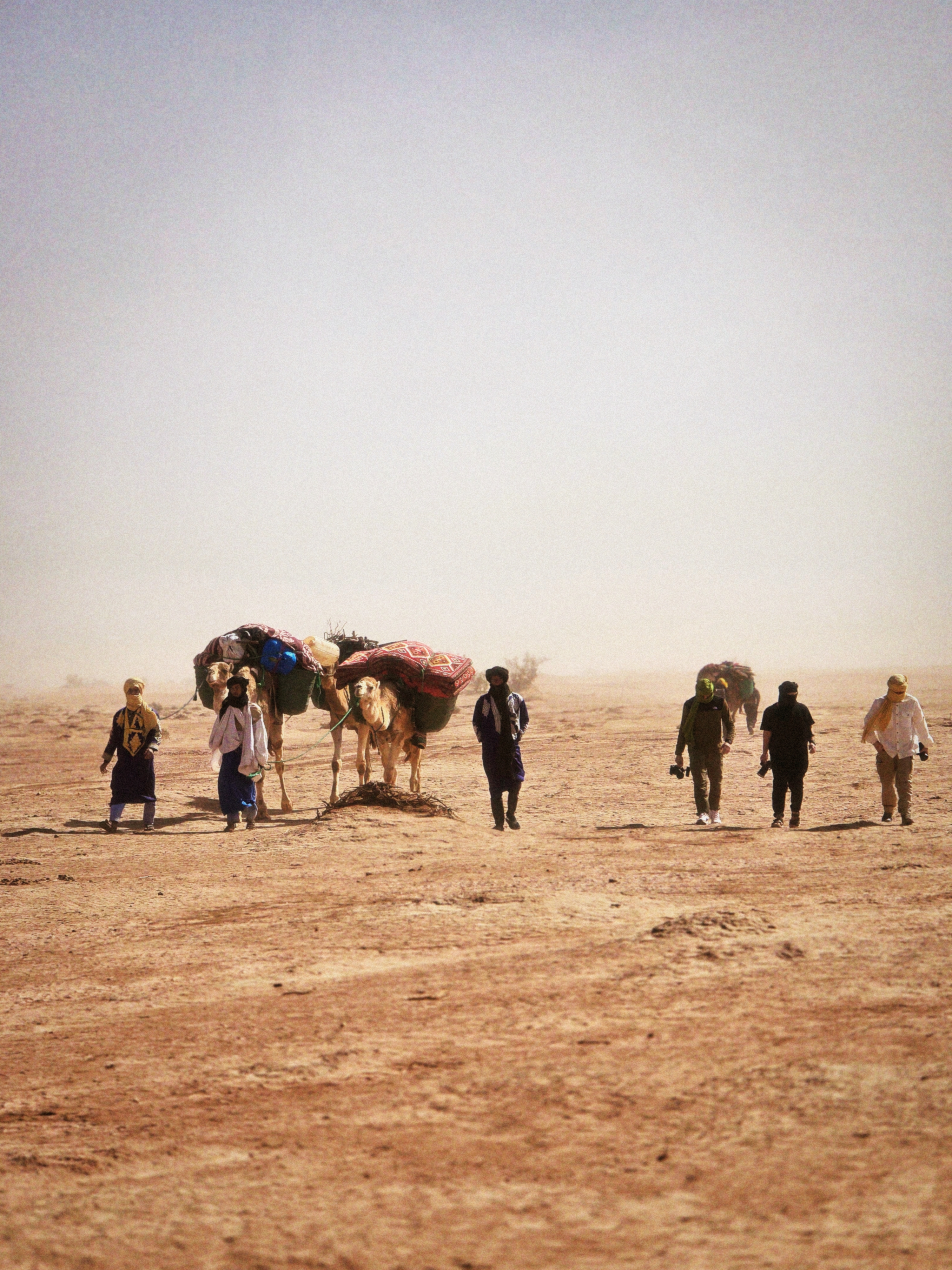
A loaded camel caravan crossing a vast open Sahara landscape.

Camel trek / 7 days

7-Day Trek

The most extensive trek, linking Sidi Naji, Erg Zmila, Erg Zahar, Lbour and the Iriqi region across five main desert days.

Quick facts

Duration
7 days
Starts in
Marrakech or Ouarzazate
Desert gateway
M’Hamid El Ghizlane
Desert days
5 main caravan days
Travel style
Camel caravan trek
Overnights
Guesthouse, then desert camps

Journey overview

A clear path into the desert, shaped by the route.

This seven-day route gives the caravan time to cross old Draa Valley landscapes, several plateaus, remote dune systems and open eastern terrain. It reaches Erg Zmila and Erg Zahar before continuing through Lbour toward local nomad encounters and the Iriqi region.

Journey highlights

What gives this route its character.

01Follow the caravan from M’Hamid and Sidi Naji to the edge of Erg Zmila

02Cross a vast dried lake before camping among the Erg Zahar dunes

03Continue across the eastern Draa Valley toward the open Lbour horizon

04Share tea with local nomads where arranged and continue toward the Iriqi region

Route overview

Follow the caravan trail.

Journey overview - route shown for illustration.

  1. 01

    Route point

    Marrakech or Ouarzazate

  2. 02

    Route point

    Draa Valley

  3. 03

    Route point

    M’Hamid El Ghizlane

  4. 04

    Route point

    Sidi Naji

  5. 05

    Route point

    Erg Zmila

  6. 06

    Route point

    Erg Zahar

  7. 07

    Route point

    Lbour

  8. 08

    Route point

    Iriqi region

  9. 09

    Route point

    Return route

Day by day

A seven-day desert journal.

Routes remain flexible around the season, wind, group pace and desert conditions.

1

Draa Valley Journey to M’Hamid

Depart from Ouarzazate or Marrakech toward M’Hamid El Ghizlane, stopping once or twice along the Draa Valley to take in the palm-grove landscapes. Before sunset, time may allow for exploring nearby villages or kasbahs and visiting the edge of the oasis where palm trees and dunes meet.

Overnight: Guesthouse with the Sahara Caravan team near M’Hamid.

Draa ValleyPalm-grove viewsPossible village or kasbah visitOasis edge
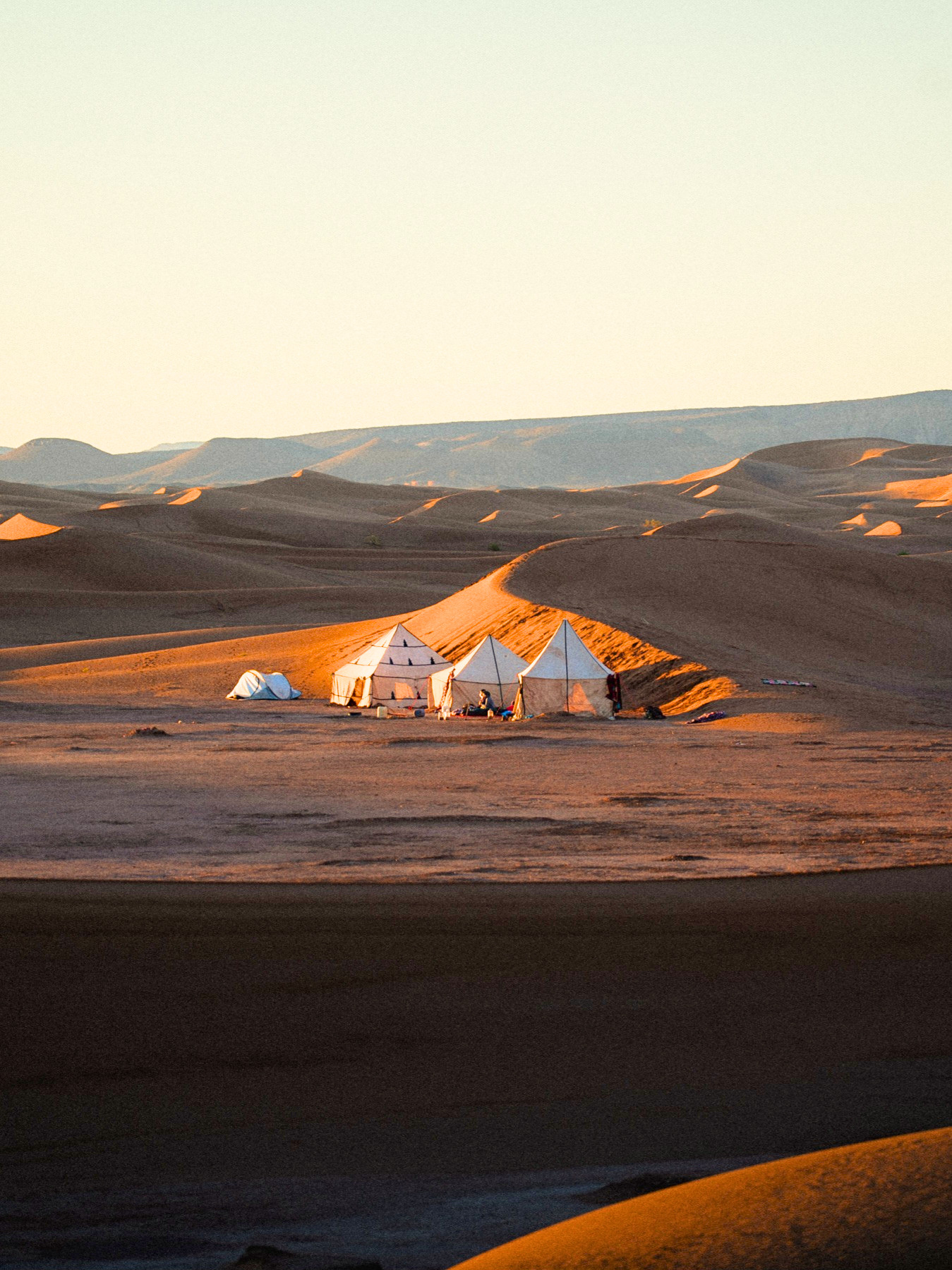
A Sahara camp beneath the warm light of sunset.

2

M’Hamid to Sidi Naji

After breakfast, the team prepares the luggage and camel caravan before departing on foot. Cross the Draa Valley and move through the M’Hamid palm grove, with tea and lunch served beneath a tamarisk tree when suitable. Continue toward Sidi Naji through older desert landscapes where traces of former settlement may sometimes be encountered, then establish camp near the dunes and open desert views.

Overnight: Desert camp near the Sidi Naji dunes.

Camel preparationDraa Valley crossingTamarisk lunchSidi Naji
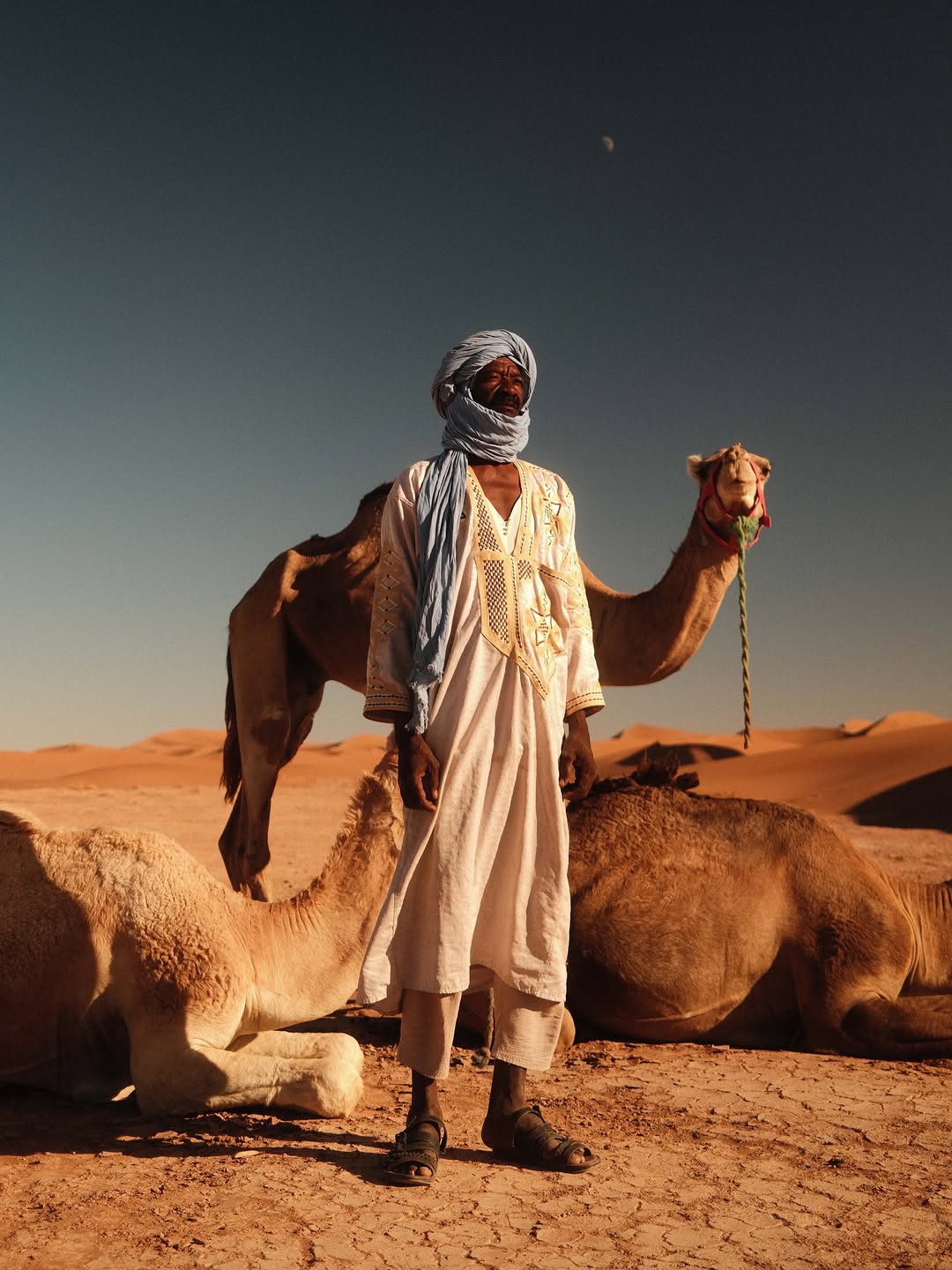
A nomad guide standing beside a camel on the Sahara route.

3

Across the Plateaus to Erg Zmila

Walk across several plateaus and old valley landscapes toward Erg Zmila. Lunch is prepared beneath a tamarisk tree beside the dunes before the route continues across the sand. Camp is set at the edge of Erg Zmila, an area of distinctive dune formations and wide open views.

Overnight: Desert camp at the edge of Erg Zmila.

Plateau crossingsOld valley landscapesTamarisk lunchErg Zmila
A camel and guide climbing a high Sahara dune.

4

Dried Lake and Erg Zahar

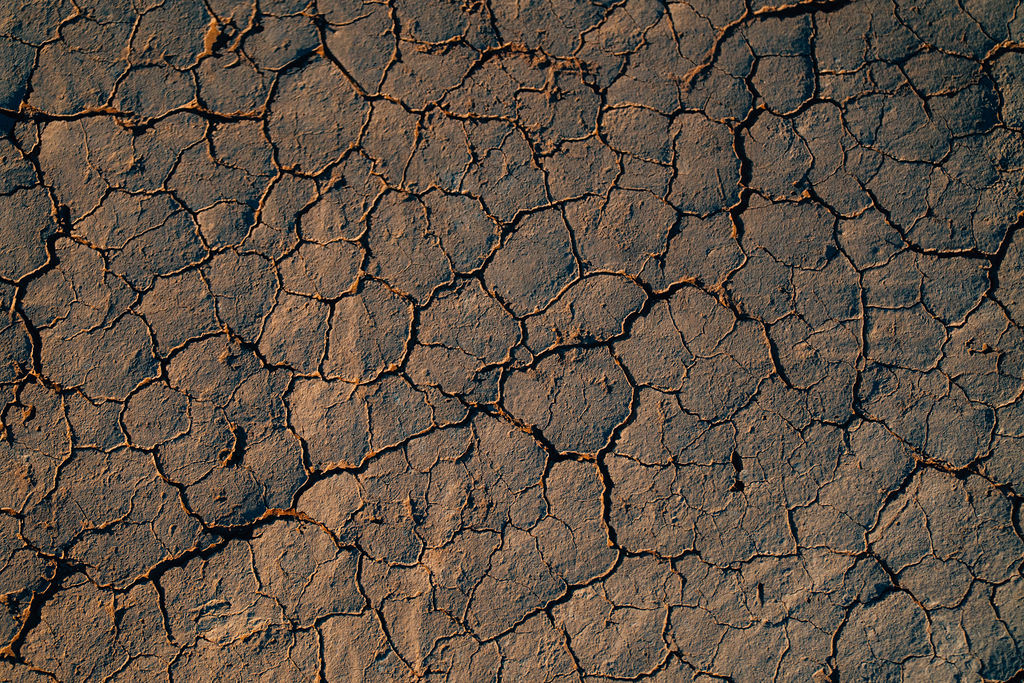
Leave camp after watching the morning light change across the dunes. Travel through sand mixed with old tamarisk trees, then continue into more open terrain and across a vast dried lake before reaching Erg Zahar. Camp among the striking remote dunes and their changing colours.

Overnight: Desert camp among the Erg Zahar dunes.

Morning lightOld tamarisk treesDried lake crossingErg Zahar
Cracked clay across a vast dried Sahara lake bed.

5

Eastern Draa Valley and Lbour

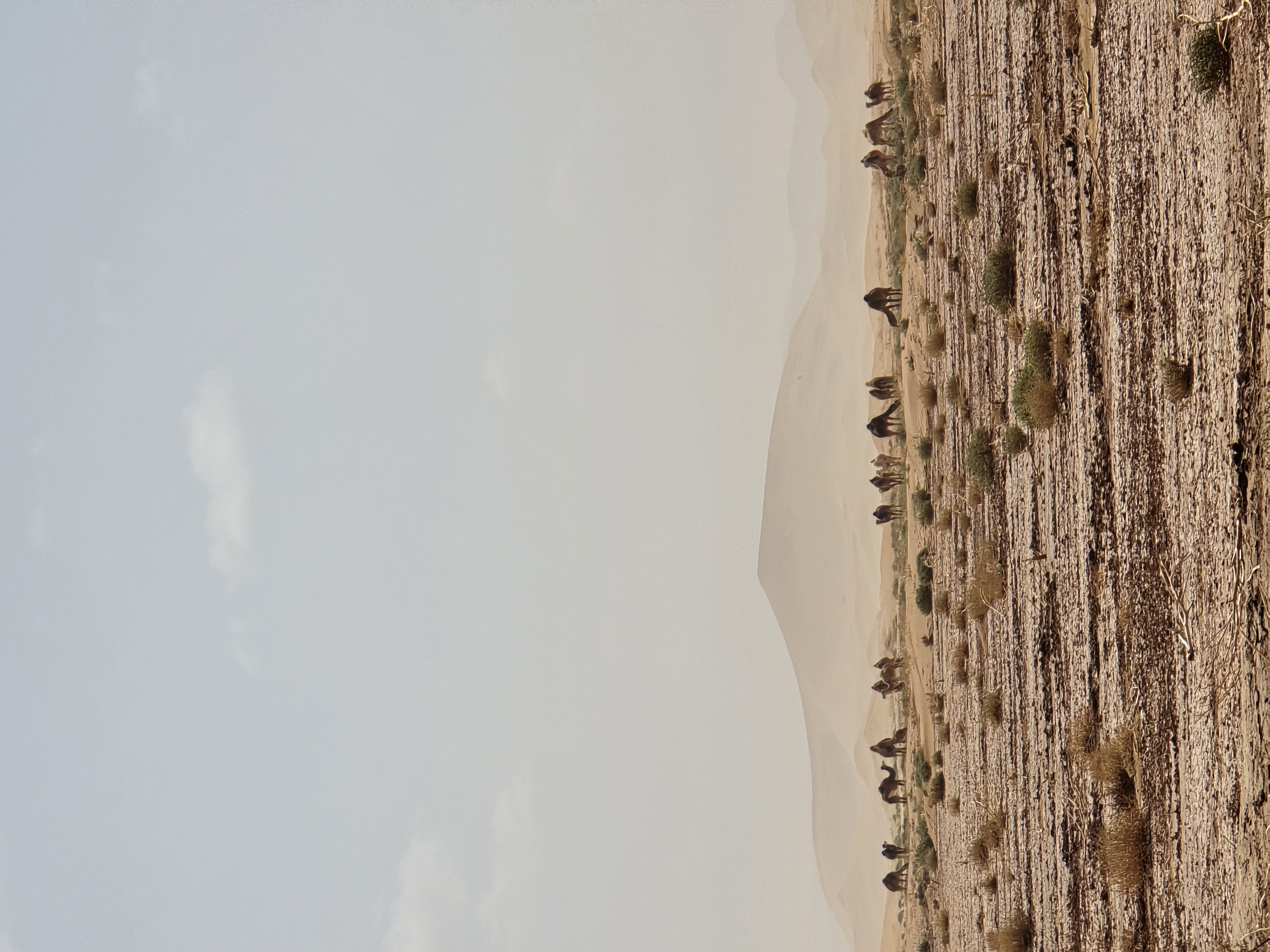
Cross the Draa Valley again toward its eastern bank, observing the old trees and changing valley landscape. Continue toward Lbour, an area associated with former nomadic farming and camel grazing. Where appropriate, the camels may be given water before an afternoon rest. Walking resumes before sunset toward a campsite surrounded by pale dunes, mountain views and wide open horizons.

Overnight: Desert camp with pale dunes, mountain views and open horizons.

Eastern Draa ValleyLbourCamel watering when appropriatePale dune camp
A camel herd moving through a wide open Sahara landscape.

6

Nomad Visit and the Iriqi Region

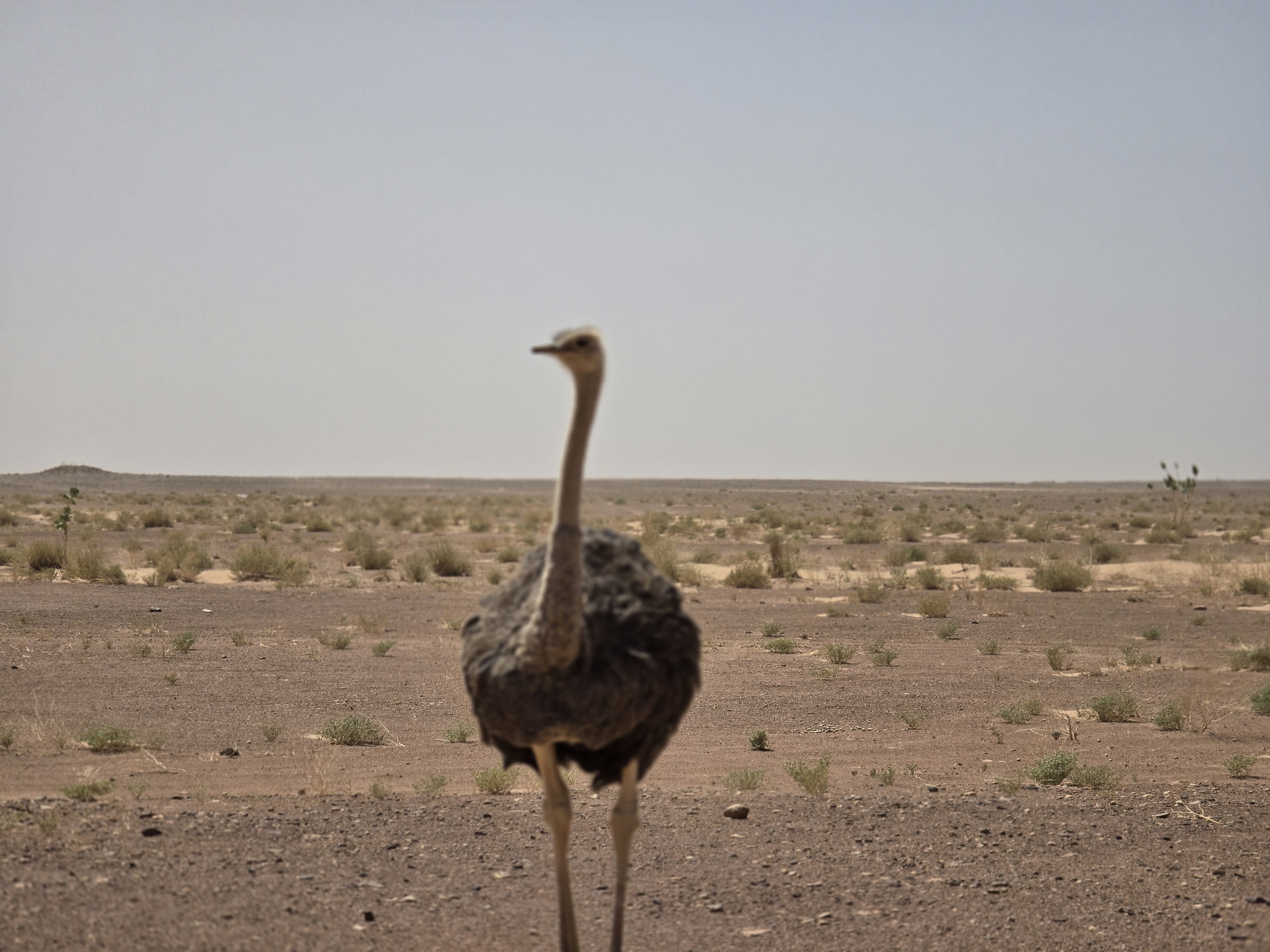
Spend part of the day visiting local nomads and sharing tea where arranged. Continue toward the animal park area, where desert wildlife such as ostriches may be seen, although sightings are never guaranteed. The route then continues toward the Iriqi National Park region for the final camp.

Overnight: Desert camp in the Iriqi region.

Nomad visit when arrangedShared teaAnimal park areaIriqi region
An ostrich photographed in a desert park landscape.

7

Return Toward Ouarzazate or Marrakech

After breakfast, begin the return journey toward Ouarzazate or Marrakech.

Desert breakfastReturn routeOuarzazate or MarrakechJourney close
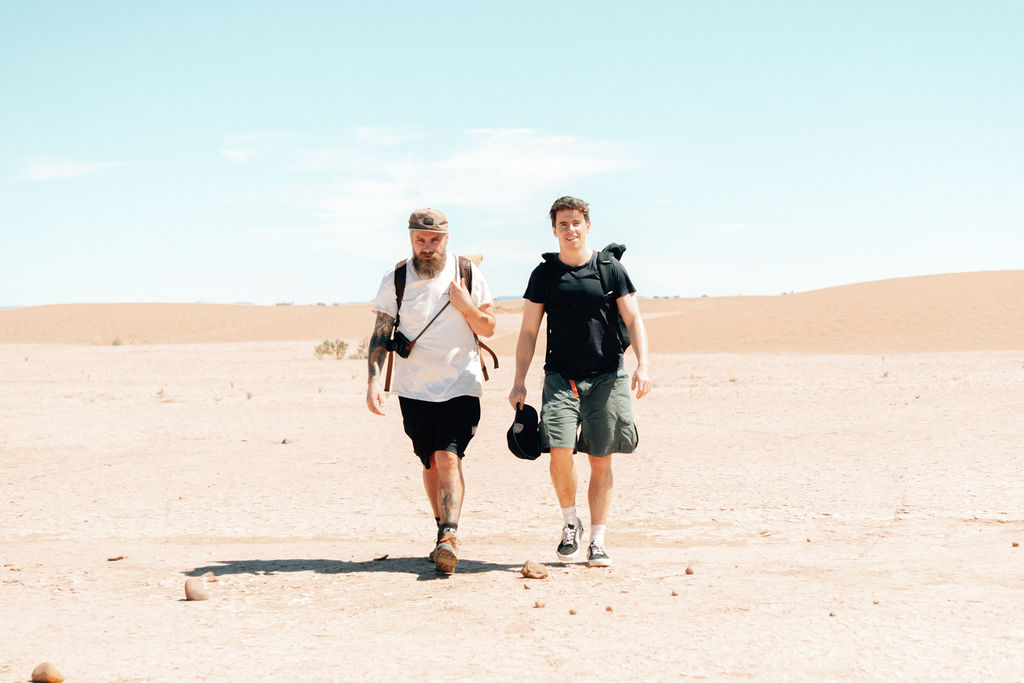
Travelers walking together at the close of a Sahara journey.

Confirmed inclusions

The practical essentials, organized locally.

Transport from Marrakech can be organized

Accommodation before or after the desert route when arranged

Meals, tea and drinking water during the trek

Camping equipment for desert nights

Camel caravan and local camel guides

Desert logistics handled by the Sahara Caravan team

Only confirmed arrangements are listed. Confirm anything not shown before booking.

Clear daily pricing

A simple rate based on group size.

Solo traveler

€100

per person, per day

2 or 3 travelers

€90

per person, per day

Group / 4 or more travelers

€70

per person, per day

Final trip pricing may depend on the selected itinerary and requested arrangements. Contact us on WhatsApp for confirmation.

Traveler information

Practical answers before you book.

Routes remain responsive to the desert. Confirm personal arrangements and current conditions directly with the team.

View What to Bring
What should I bring?

Bring practical protection from sun, sand and cooler evenings, comfortable walking shoes, a small backpack, personal medication and the essentials listed on the What to Bring page.

Where do we sleep?

The arrival night is spent at the stated guesthouse or camp. Trekking nights are spent in desert camps, with a tent available and the possibility of sleeping beneath the stars when conditions allow.

What happens to luggage during the trek?

At the start of the walking route, the team prepares the camels and loads the luggage for the caravan. Keep the items you want during the day in a small backpack.

Are camels part of the journey?

Yes. These treks travel with a prepared camel caravan and the Sahara Caravan team through the desert route.

Where does the trek begin?

The itinerary begins with the road journey from Marrakech or Ouarzazate to M’Hamid El Ghizlane. The camel trek then departs from the desert gateway.

Can the itinerary change because of desert conditions?

Yes. The order and practical rhythm may be adapted to weather, wind, the route and local conditions. The confirmed destinations and arrangements are discussed before departure.

Travelers walking together at the close of a Sahara journey.

Ready for Seven Days Beyond the Horizon?

Share your dates, group size and preferred rhythm. The team will confirm the route and practical arrangements directly on WhatsApp.

Book this journey